What (and what not) to eat in Colombo
You may well come across blogs or articles singing high praises of Sri Lankan food and all the wonderful restaurants on offer. Just wandering about, you might find the reality a little different, specially in Colombo. However, with a bit of guidance it’s entirely possible to spend a very enjoyable few days in the capital whether you are keen to discover local flavours or seeking familiar favourites.
The Gallery Café - Wine and dine in style
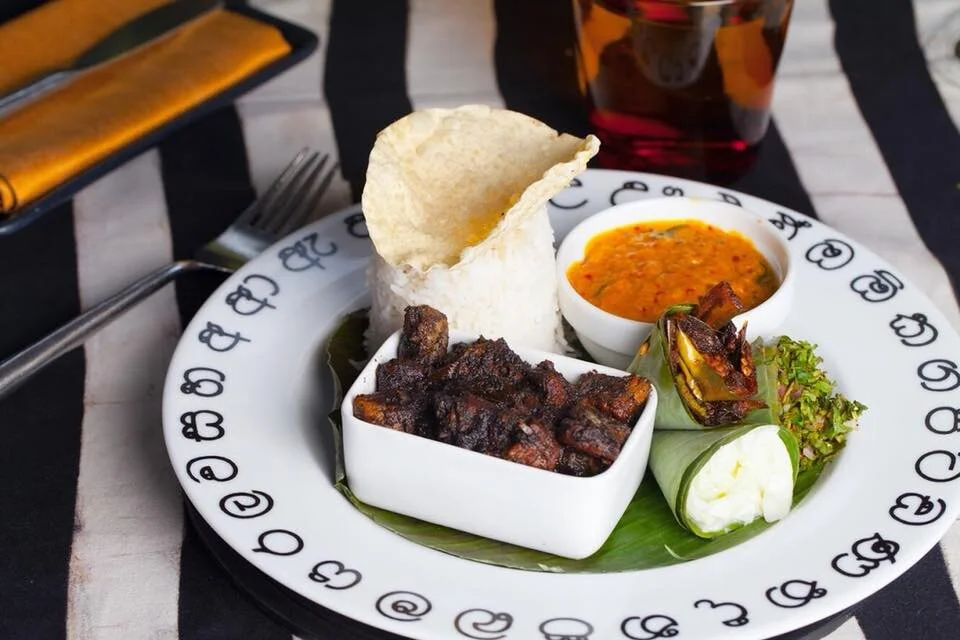
Housed in the former offices of world renown Sri Lankan architect the late Geoffrey Bawa, The Gallery Cafe is one of the most beautiful and awe striking restaurants in town. The tastefully decorated space is a feast for the senses; the classic black and white ‘Paradise Road’ colour palette, the dimly lit patio and art gallery and the leafy courtyard are masterpieces in modern tropical styling. It’s not just about the looks here though. The Gallery Cafe has one of the truly perfected local and western menus you’ll find anywhere in the country. The local must-have here is the the famous Black Pork Curry. The Western offerings tend to lean towards the classics, ranging from a delectable fettuccine with lobster and prawns to a hearty sirloin steak. The desserts deserve a special mention as the cakes on offer are as beautiful as the surrounds. The signature cocktail of tamarind chili martini is not to be missed.
Ministry of Crab - For the seafood lovers
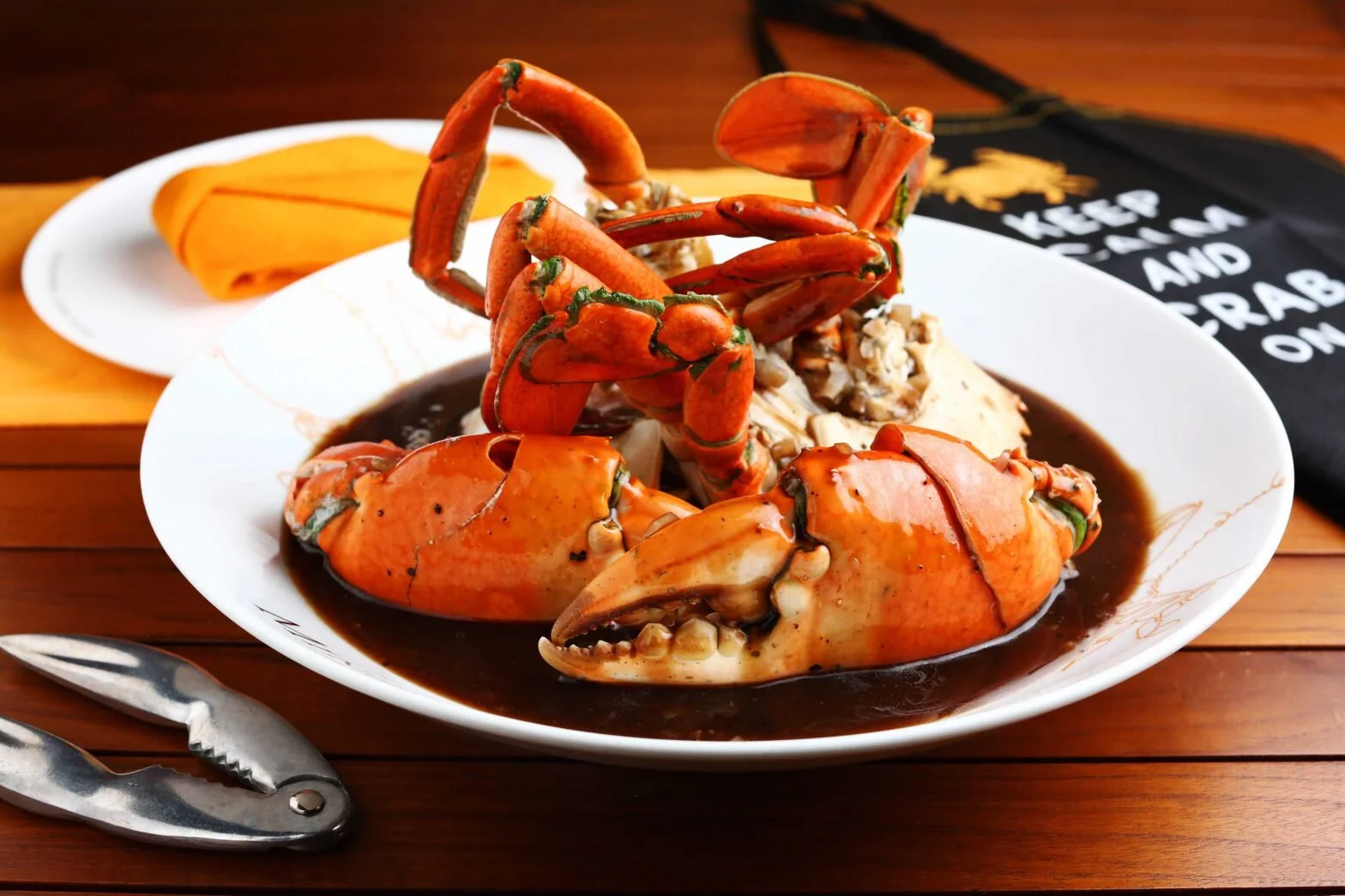
Ministry of Crab (MoC) is THE Colombo dining institution. Created by one of Sri Lanka’s most innovative chefs, Dharshan Munidasa, in collaboration with two cricketing legends of the island, MoC has been listed on Asia’s 50 Best Restaurants list several years running and with good reason. The crabs here reach up to an impressive 2kg in weight and come in a huge range of cooking styles to suite any palate. The garlic chilli crab tends to be our favourite, closely followed by the classic baked crab which needs to be ordered in advance. Even the side dishes here are a flavour sensation; garlic bread soaked in crab gravy and coconut sambol deserve a special mention. Located in the heart of Colombo, MoC tends to feature on the itinerary of every epicurean travellers to the island and hence a reservation is essential to dine here.
Kaema Sutra – a modern take on traditional dishes
To sample local cuisine with a modern twist there’s no better place than Kaema Sutra, another creation of talented chef Dharshan Munidasa. With a cheeky name and a dining concept that elevates already delicious Sri Lankan cuisine with clever techniques and flavours, expect the unexpected here. The classic Sri Lankan hopper is given a modern take at Kaema Sutra with a batter doused in squid ink. Served with with a dollop with fresh buffalo curd drizzled with olive oil and sea salt this is a unique and delicious version of the hopper you see everywhere in the country. The Porksicle - a slow cooked curried pork rib wrapped in a Godamba roti - is another clever item bursting with flavour. The crab string hopper kottu is another highlight that will have you remembering flavours of Sri Lanka long after you leave the country.
VOC Cafe at Dutch Burgher Union (DBU) - Old Colombo favourite
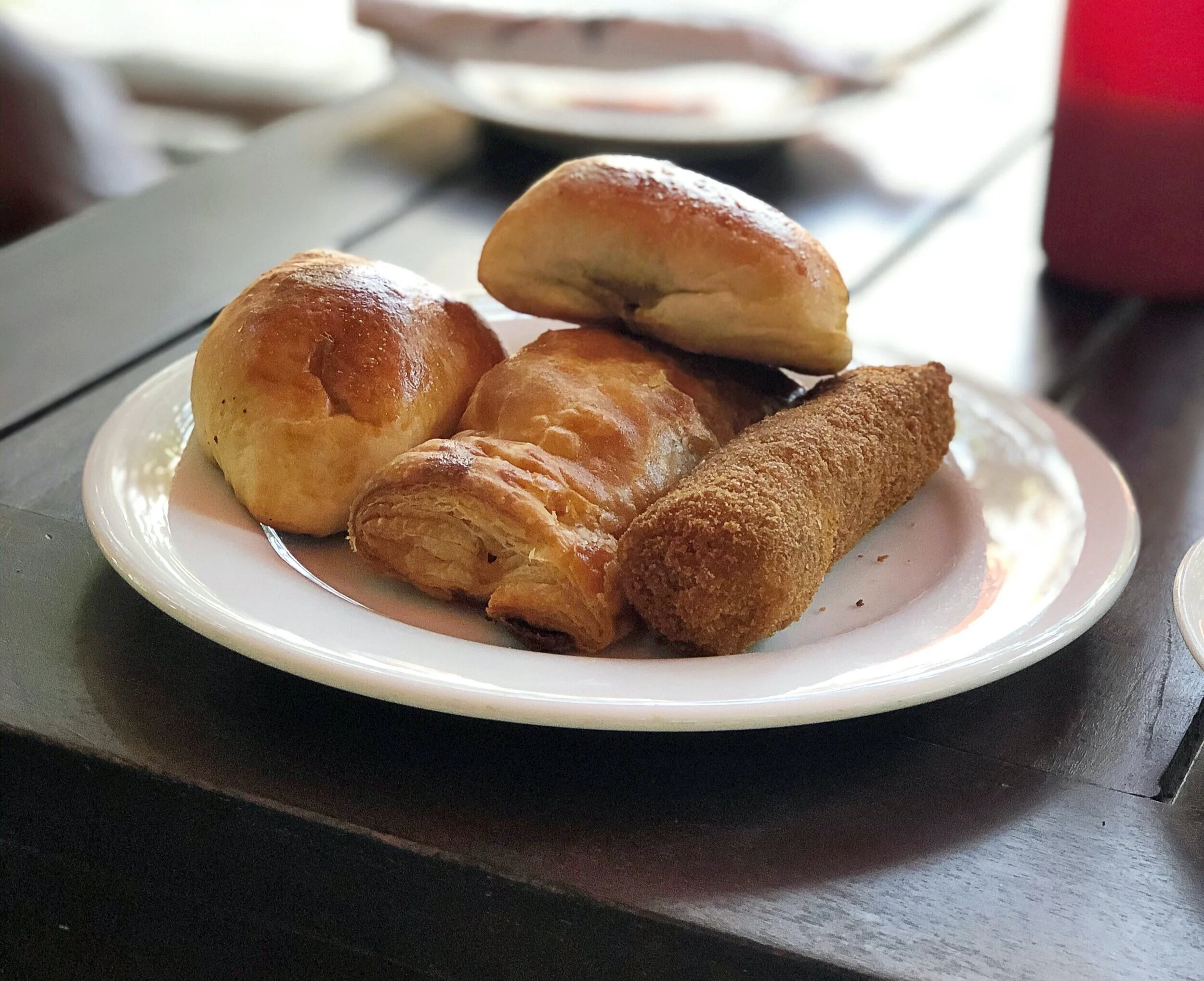
An old-school Colombo favourite like no other, VOC Cafe serves up some amazing treats that sell out like hotcakes everyday. The best snacks in Sri Lanka are so called ‘short eats’; soft buns filled with spicy fillings, deep fried crepes filled with spicy fillings…. you get the picture.. short eats are all about carbs and spices. We think VOC Cafe’s “maalu paan” (bread stuffed with spiced fish filling) and the beef Chinese rolls (rolled up crepes stuffed with spicy beef filling then crumbed and deep fried) are the best in Colombo. The service here tends to be well and truly on island time so grab a table in the shady courtyard with a cold beer and enjoy the experience.
The Good Market
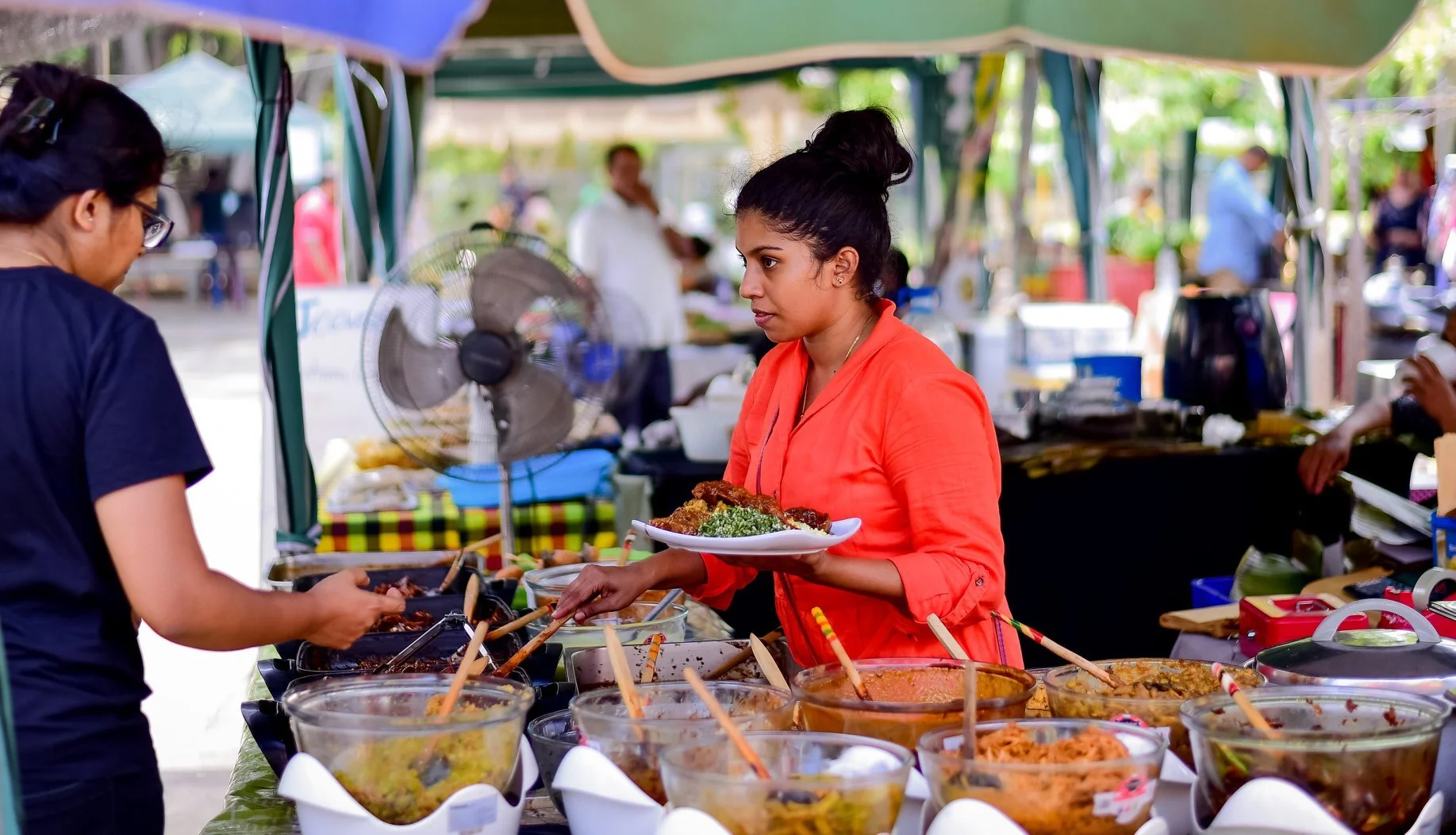
Held every Saturday from 10am-6pm, Good Market is a curated marketplace for vendors that are “good for people and good for the planet”. Held in an outdoor area in the Racecourse Grounds, this is in fact as good as a street food experience gets in Colombo. There is real variety of food on offer here from classic Sri Lankan cuisine to regional favourites, organic produce, exotic fruit juices, jams and chutneys and even hard to find Western treats such as excellent sourdough bread and croissants. We love the rice and curry at Jeeva’s- look for the stall with the longest line at lunch time.
What’s to avoid?
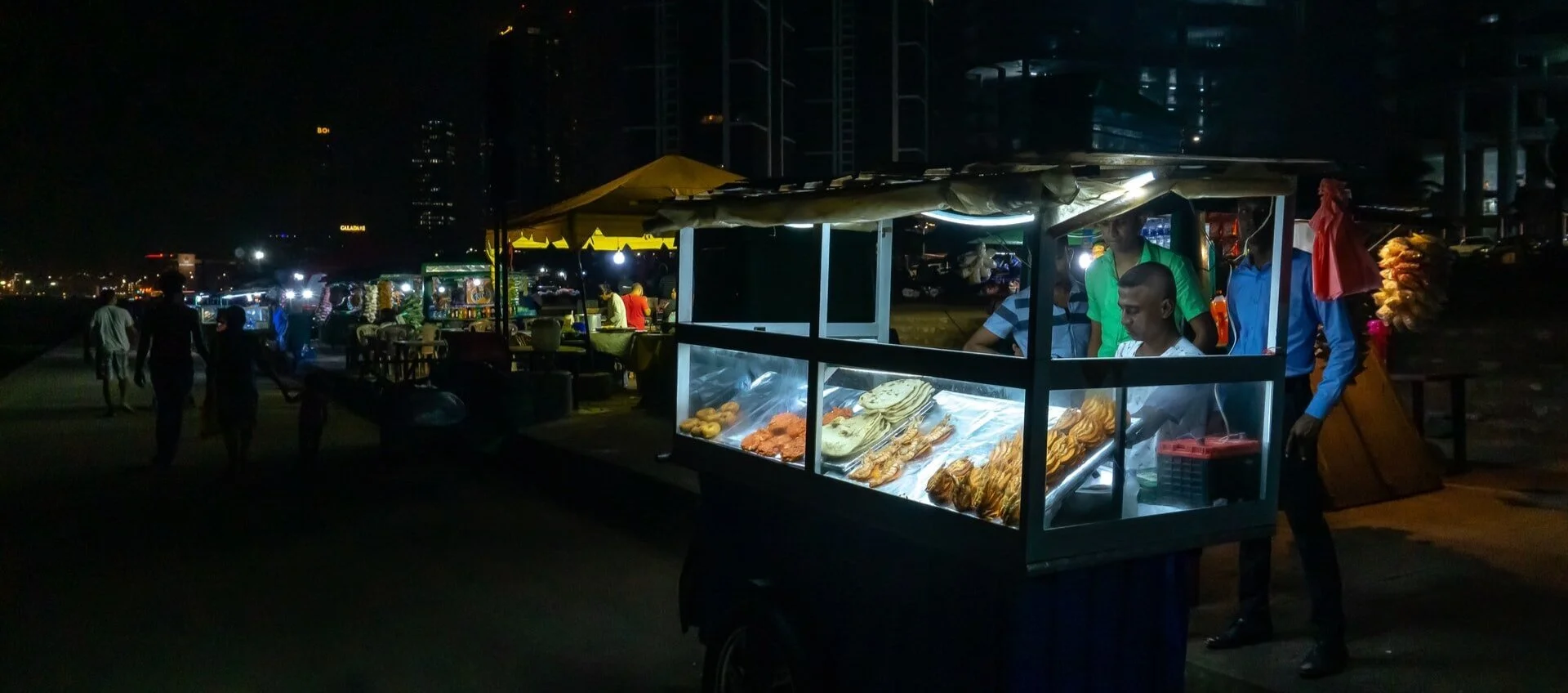
The adventurous among you may be tempted to sample Sri Lankan street food. While we don’t want to discourage spontaneity, it’s also best to manage expectations when it comes to this. Sri Lanka doesn’t have a street food culture similar to other popular Asian tourist destinations. Night markets and hawker centres aren’t a thing here and the closest you would come to that is Galle Face Green, where you will find a very small stretch of dimly lit food stalls selling the legendary ‘Isso Wade’ (spicy lentil flour patties topped with prawns), kottu roti and short eat. Our advice is to proceed with caution, specially if Colombo is at the beginning of your tour in Sri Lanka as the strong spices coupled with dubious hygiene standard could be a recipe for an uncomfortable start to your holiday.
If you are keen to mingle with locals for an authentic experience you might also be tempted to try your luck at one of the many small roadside shops known as kades that the city is littered with. These are usually basic, generally rather scruffy, local eateries that serve no-nonsense local grub at affordable prices. While the experience might feel authentic and the food on offer will have variety from hoppers and string hoppers to lamprais, biriyani and rice and curry, the quality can be inconsistent at best and stomach churning at its’ worst. Use your common sense, get a feel for the hygiene standards, have a snack if you are truly curious but leave the heavy eating to one of the above recommendations.