The King of all Coconuts
There’s plenty of them
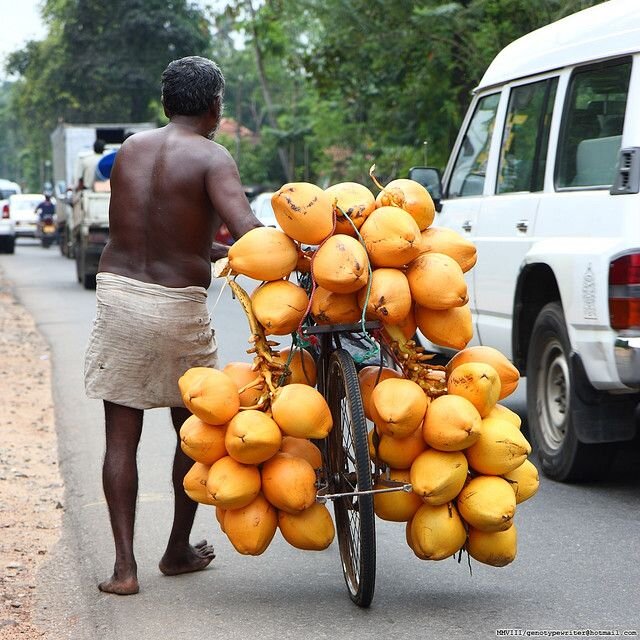
The king coconuts are indigenous to Sri Lanka and they are readily available wherever you look. The country produces roughly 2.7 billion coconuts per year and 75% of it is consumed by locals for various purposes. The king coconut not only serves as a refreshing natural drink but it also embodies other qualities that could be used in beauty and hair care products. The coconut shells are also an amazing fertilizer that’s widely used among farmers for cultivation.
The green coconut
While the king coconuts are exclusively used as cooling beverages, the common green coconuts too have many uses in every Sri Lankan household. Although the green coconut water can be used as a beverage, the taste is a little bland and generally not given preference over the king coconut. That said, the green coconut meat inside is used for various cooking purposes since it serves as the staple for (almost) every curry that’s made in the local cuisine.
Inside of the king coconut is both delicious and nutritious
Being wildly prized for its nutritional properties, the King coconut is also renowned in Ayurvedic therapy since millennia. While the thirst-quenching liquid is hydrating and includes more potassium than a banana, the edible meat contains lots of fibre.
Beyond Sri Lanka
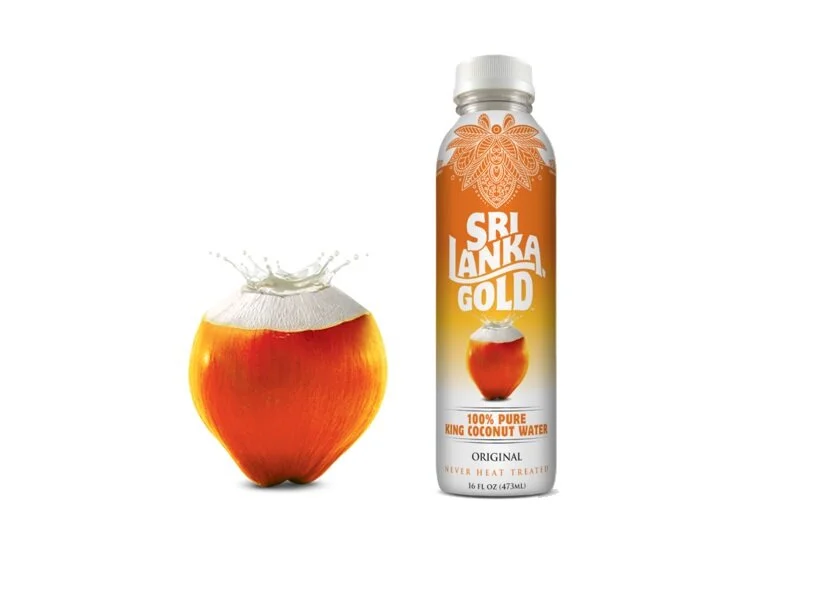
The king Coconut has gained popularity in recent years and is now available as a bottled product that is exported to the Western world. We can’t think of a better alternative to replace carbonated, fizzy drinks and sugar-laden fruit juices!
Travellers to Sri Lanka are marvelled by its’ beauty, heritage and culture but curiously, among the memorable experiences encountered, the refreshing king coconut almost always gets a mention.
The king coconut tree is a slender ash grey trunk crowned with a frond of fan-like weaving leaves; one of the most distinctive features of Sri Lanka’s landscape.
Everyone’s favourite drink
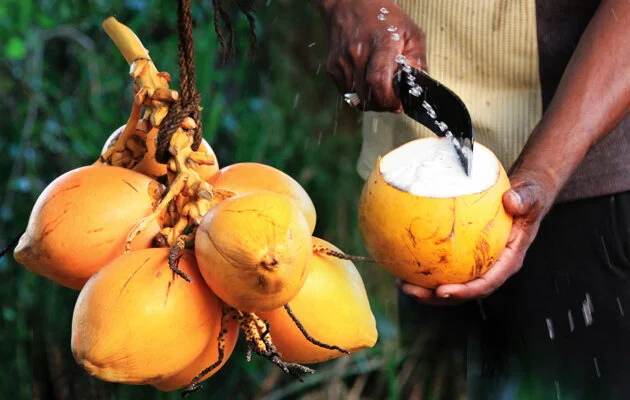
The king coconut water is popular among both locals and foreigners alike. Locals refer to it as “Thambili” due to its’ bright orange colour and the soft sweet taste of the water. It is quite an easy find throughout the island, especially along the coastal areas on hot, dry, summer months.